
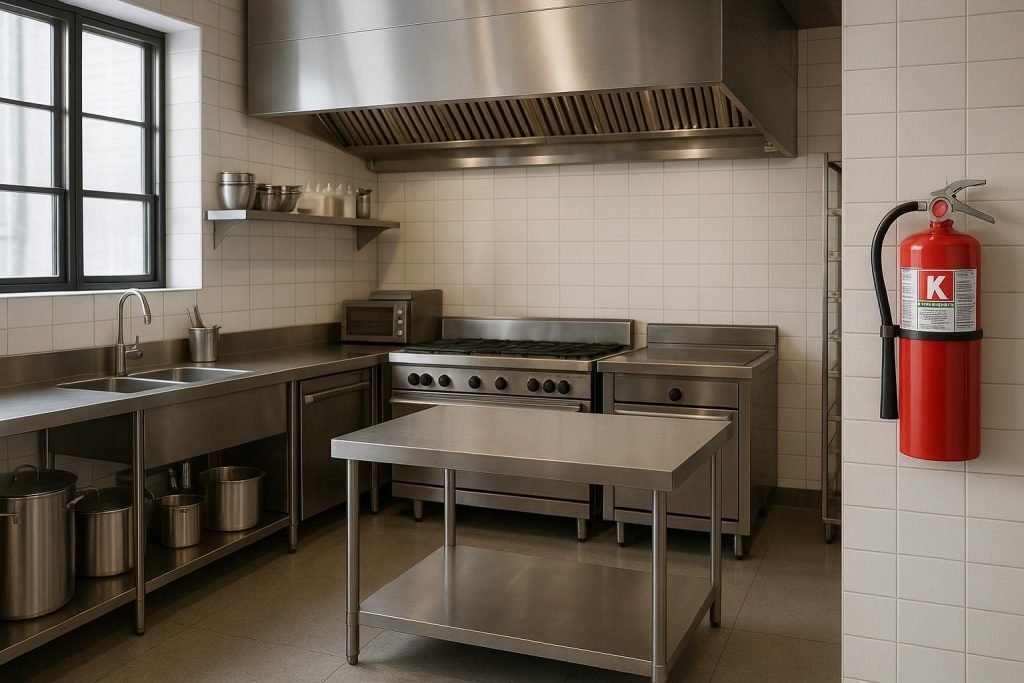
Understanding the Importance of Class K Fire Extinguishers in a Kitchen with a Suppression System
When you operate a commercial kitchen, safety should always be at the forefront of your considerations. From managing busy dinner rushes to training staff on proper food handling, every detail matters. But fire safety, in particular, demands consistent vigilance. People often ask: “If my kitchen has a fire suppression system, do I still need a Class K fire extinguisher?” The answer is generally yes. Class K fire extinguishers are not only a requirement in most jurisdictions; they also serve a critical function in protecting your staff, your property, and your patrons from the devastating effects of cooking oil or grease fires. Below, we explore why Class K extinguishers and kitchen fire suppression systems are complementary, and how properly maintaining both can help keep your kitchen code-compliant and prepared.
What Exactly Are Class K Fire Extinguishers?
Class K fire extinguishers are designed to tackle fires that involve cooking oil, grease, or animal fat—all of which burn at extremely high temperatures in commercial kitchens. These fire extinguishers typically use a wet chemical agent that reacts with the hot oils to create a soapy foam, effectively smothering the fire and preventing it from reigniting. This method is known as saponification. Because of their specialized formulation, Class K units are different from standard ABC dry chemical extinguishers. ABC extinguishers can be effective for many other types of fires, but they are less effective—and may even be unsafe—when dealing with very hot grease fires. Consequently, Class K extinguishers are a requirement in nearly every commercial kitchen, and having one gives you the on-the-spot capability to handle flare-ups.
The Role of a Kitchen Fire Suppression System
A kitchen fire suppression system typically comprises nozzles installed in a kitchen hood or ductwork. These nozzles are connected to a network of pipes or tubing that hold wet chemical fire suppressant. Once a fire is detected, the system activates automatically, flooding the cooking area with the wet chemical agent. This rapid response is instrumental in containing a fire before it has a chance to spread throughout your kitchen or, worse, your entire facility. Some suppression systems even offer a manual activation control, allowing your trained staff to trigger it if they spot a fire early.
Most modern kitchen fire suppression systems are designed to be code-compliant and integrate neatly with other life safety systems, such as your building’s fire alarm panel. Still, the fact that you have a fire suppression system in place does not negate the necessity for Class K fire extinguishers. All major fire codes and local jurisdictions emphasize having a handheld extinguisher as an immediate line of defense, especially for unexpected flare-ups that occur while your automatic system is recharging or has not fully activated yet.
How Class K Extinguishers and Fire Suppression Systems Work Together
Relying solely on a fire suppression system in your commercial kitchen may leave gaps in your overall fire protection strategy. While suppression systems are excellent for larger-scale incidents, smaller fires can still ignite in areas not fully covered by these systems—for instance, behind appliances or in corners where hot oil might accumulate. Additionally, if a suppression system malfunctions or fails to activate, you want a backup option at hand. Class K fire extinguishers provide that necessary layer of redundancy. Think of them as a safety net, and one that gives your team direct control while they await a more comprehensive response from the automatic system or from emergency fire services.
During a busy service, a quick-thinking staff member with proper training can extinguish a small flare-up using a Class K extinguisher before it spreads. This reduces downtime, property damage, and the risk of injury. It also keeps you from losing an entire service period due to an activated suppression system, which might require cleaning and resetting before you can continue cooking. By using both systems, you cover both large-scale and localized fire scenarios, ensuring maximum protection for your staff and your livelihood.
Staying Compliant with Local Fire Codes
Compliance with fire codes is crucial to operating a safe and legal commercial kitchen. In many regions, including those around Edmonton and beyond, the presence of a kitchen fire suppression system does not override the requirement for portable extinguishers specifically rated for cooking oil. Local authorities often conduct unannounced inspections or request proof of compliance during your operating license renewals. Failure to have a Class K extinguisher, or failing to maintain your existing one properly, can result in fines or even temporary shutdowns. Since this risk can be easily avoided, it makes sense to install and regularly service Class K extinguishers.
Beyond having the right equipment, there are also mandates for frequent inspections. Fire codes typically require obtaining professional maintenance at least once a year. These visits ensure the extinguisher is charged, the seals are intact, and the nozzles are clean. Additionally, your local regulations might dictate recertification processes every few years to keep your units code-compliant. If you want a more detailed look at how to keep your kitchen fire suppression system up to local codes, see our FAQ on What steps should I take to ensure my kitchen fire suppression system meets local fire codes?
Why Wet Chemical Agents Are Often Required
Suppression systems and Class K extinguishers typically deploy wet chemical agents that specifically target cooking oils and grease. These agents cool the heated liquids rapidly and form a barrier that prevents oxygen from fueling the flames, thus preventing re-ignition. While some older systems still employ dry chemicals, many regions have moved toward requiring wet chemical solutions for commercial kitchens, as these chemicals have proven more effective for high-heat cooking environments. If you’d like more information on how these agents work, check out our FAQ on Are wet chemical agents mandatory for kitchen fire suppression?
System Inspections and Maintenance: A Dual Priority
Having the right equipment is only half the battle. Regular inspection and maintenance of both your Class K extinguisher and your kitchen fire suppression system is essential for ensuring reliable performance in an emergency. Certified technicians are trained to identify potential issues—such as a decrease in agent pressure, a clogged nozzle, or a malfunctioning pull station—before they become hazardous. Scheduling system inspections and maintenance at recommended intervals helps you remain prepared and code-compliant.
A good rule of thumb is to follow the manufacturer’s guidelines, as well as local codes, for monthly or quarterly self-checks. In addition, have a professional inspection at least once per year. If your local fire marshal or insurance provider requires more frequent evaluations, build those into your schedule. If you’re curious how often a restaurant’s system should be serviced overall, read our FAQ on How often should a restaurant’s kitchen fire suppression system be serviced?
The Benefits of Training Your Staff
Owning the proper equipment means little if your staff doesn’t know how to use it. Train your team on the operation of Class K fire extinguishers and how to handle a fire emergency safely. This training should include recognizing the different types of extinguishers in your facility, identifying when a flame is small enough for an extinguisher to handle, and knowing where the closest unit is located. It’s also good practice to show employees how to operate pull stations for the kitchen fire suppression system and to conduct drills that replicate real-world scenarios.
Many businesses find that routine in-house training sessions not only increase staff confidence but also decrease potential fire damage. Should an actual fire break out, your team will know exactly which steps to take first, such as shutting off heat sources, activating the suppression system, or calling for emergency fire services. This swift, knowledgeable response can significantly reduce both the economic and human impact of a fire incident.
Can a Kitchen Fire Suppression System Be Integrated with a Monitored Fire Alarm?
Kitchen fire suppression systems are often part of a larger network of fire alarm and suppression systems in commercial buildings. Integrating them with a monitored fire alarm brings immediate alerts to your monitoring center when a fire starts. This kind of integrated approach helps ensure that emergency responders are dispatched as quickly as possible, even if your staff is busy navigating an active incident. If you want to learn more about integrating your kitchen system with a monitored fire alarm, consult our FAQ: Can I integrate a kitchen fire suppression system with a monitored fire alarm?
Practical Tips for Implementation
- Proper Placement: Install Class K extinguishers in clearly visible and accessible areas, usually no more than a few steps away from high-risk cooking equipment.
- Signage and Labeling: Make sure your extinguishers are clearly labeled, and consider wall-mounted signs that highlight extinguisher locations.
- Regular Checks: Perform monthly visual inspections to ensure the pressure gauge is in the correct range and the pin is secure, then schedule yearly maintenance by a certified technician.
- Employee Training: Conduct regular training sessions so employees can quickly use a Class K extinguisher. Emphasize the PASS method (Pull, Aim, Squeeze, Sweep) for safe extinguisher operation.
- Coordination with Suppression Systems: Ensure that you have clear guidelines for manually activating the fire suppression system if the automatic trigger fails or is delayed.
Choosing the Right Products and Services
You have many options when it comes to selecting Class K extinguishers and planning a kitchen fire suppression system. However, to remain code-compliant and confident in your fire safety measures, consider working with qualified, certified technicians who have extensive experience in restaurants and other commercial kitchens. These professionals can offer system inspections and maintenance, supply the right extinguishers, and recommend best practices for your unique layout.
For further information on the different types of fire extinguishers, including Class K, you can visit our Fire Extinguishers page. If you’re seeking more comprehensive guidance on designing, installing, or upgrading a kitchen fire suppression system, our Fire Suppression Services page can be a helpful resource. As a best practice, you may also want to review the broad range of Fire Protection Services that ensure a cohesive approach to safety throughout your facility.
Maintaining a Holistic Fire Safety Culture
A truly secure commercial kitchen goes beyond just the mechanical systems. Consider creating a holistic culture of safety, where employees feel comfortable reporting hazards, scheduling extra training, and being proactive about potential risks. Encourage your team to voice concerns if they notice anything unusual about the extinguisher’s gauge or if a nozzle in the hood suppression system looks blocked. This sense of shared responsibility can help catch issues early, long before they escalate.
Keep in mind that equipment alone doesn’t guarantee safety. Your staff’s attitude and preparedness are crucial elements. Emphasize “see something, say something” as a guiding principle, and let employees know they won’t be penalized for erring on the side of caution. When everyone views fire safety as part of their daily routine, you’re more likely to catch small problems before they become large-scale emergencies.
Final Thoughts
A Class K fire extinguisher remains a fundamental piece of your fire protection plan, even when you have a fully outfitted and code-compliant kitchen fire suppression system. While the latter provides an automatic response to dramatic fire events, a Class K extinguisher’s portability and ability to handle high-temperature cooking oil fires makes it indispensable. Together, they form a defense-in-depth approach that addresses both small flare-ups and full-blown emergencies.
If you ever feel uncertain about whether your commercial kitchen meets local requirements, scheduling an assessment with a certified provider can offer peace of mind. From life safety systems to daily readiness, it pays to stay proactive. By pairing the capabilities of your kitchen fire suppression system with the versatility of Class K extinguishers—and ensuring both are maintained—you significantly reduce the risk of severe fire damage, protect your staff, and stay aligned with local regulations. Ultimately, the relatively small investment of proper extinguishers and routine inspections can save you from far costlier hazards down the road.
