What is fire alarm monitoring?

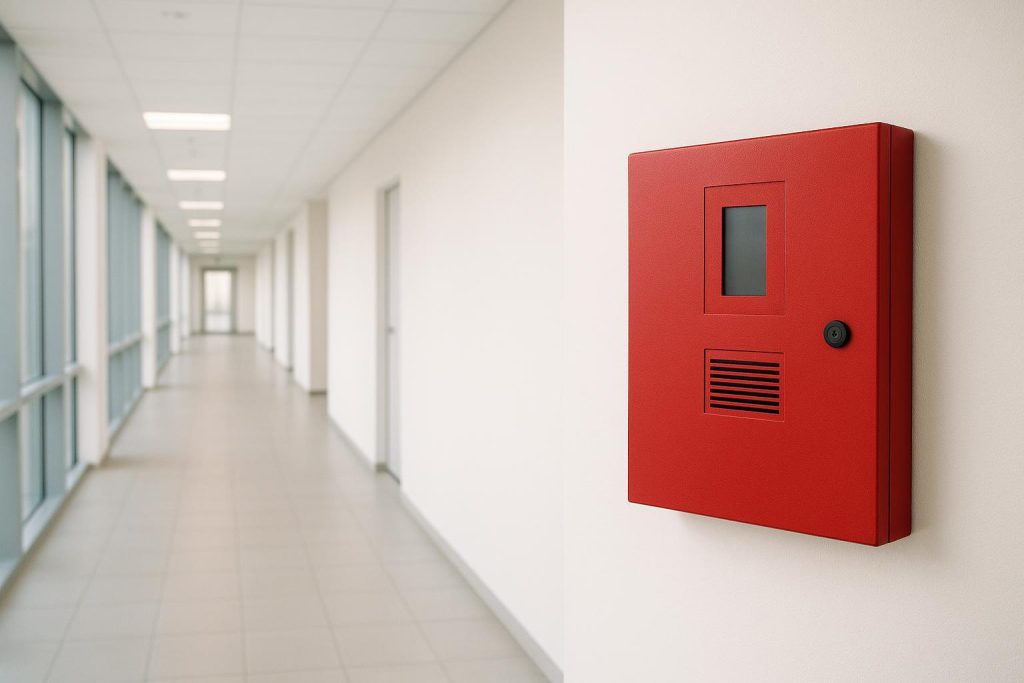
Commercial hallway featuring a red panel for fire alarm monitoring on the right wall.

Fire alarm monitoring is a 24/7 service that connects a building’s fire alarm system to an off-site monitoring station. When devices such as smoke detectors, heat detectors, sprinkler flow sensors, or manual pull stations activate, the system sends a signal to the monitoring centre. Trained operators can then notify the appropriate emergency services and designated building contacts.

This is particularly important when a commercial building is empty or has limited staff on site. An unmonitored alarm may alert people inside the building, but monitoring provides an additional layer of protection by communicating the alarm to people who can respond. Advanced systems may use telephone, cellular, or internet connections, with multiple communication pathways helping reduce the risk of a missed signal.

Fire alarm monitoring can be used in commercial buildings, apartment complexes, industrial facilities, schools, healthcare facilities, and other properties where rapid notification is important.

Advanced Fire Protection provides fire alarm monitoring services in Edmonton and surrounding communities. A properly installed and maintained monitored fire alarm system can support faster emergency response while helping building owners maintain a comprehensive fire safety strategy.

Related FAQs

Essential Steps for Testing Interconnected Fire Alarms Interconnected fire alarms are designed so that when one device detects smoke, heat, or fire, every alarm in the system activates. This level of integration offers comprehensive protection for occupants, making timely testing of each component essential. Regular checks help verify that your entire setup works properly and […]

Understanding the Two Types of Fire Alarm Control Panels When it comes to safeguarding people and property, it is essential to recognize the two primary types of fire alarm control panels: conventional and addressable. Both serve as the central hub of a fire alarm system, receiving signals from detectors, initiating alerts, and helping occupants respond […]

Understanding fire alarm device compatibility No. Fire alarms are not universally compatible with every fire alarm panel. A fire alarm system is engineered so its panel, detectors, pull stations, notification devices, modules, wiring and programming work together as a tested combination. Before adding, replacing or upgrading a device, commercial property owners should confirm that it […]

Buildings That Benefit from Remote Fire Alarm Alerts Remote fire alarm alerts provide real-time notifications that are extremely valuable for a broad range of properties. Any facility aiming to protect occupants and assets can benefit, but certain buildings have a higher need due to size, complexity, or occupancy levels. Large commercial complexes, for example, must […]

How remote fire alarm monitoring fits into code compliance Remote fire alarm alerts are not automatically required for every commercial property in Alberta. Whether monitoring is required depends on the building’s fire alarm system, occupancy, size, use, permit conditions, insurer requirements and the direction of the authority having jurisdiction (AHJ). The AHJ is typically the […]

Understanding How Interconnected Smoke Alarms Communicate Interconnected smoke alarms are designed to work as a cohesive safety network, ensuring that when one alarm detects smoke, all the connected units will trigger an immediate alert. This functionality can take different technological forms, with some systems using hardwired connections and others operating wirelessly. In a hardwired setup, […]