
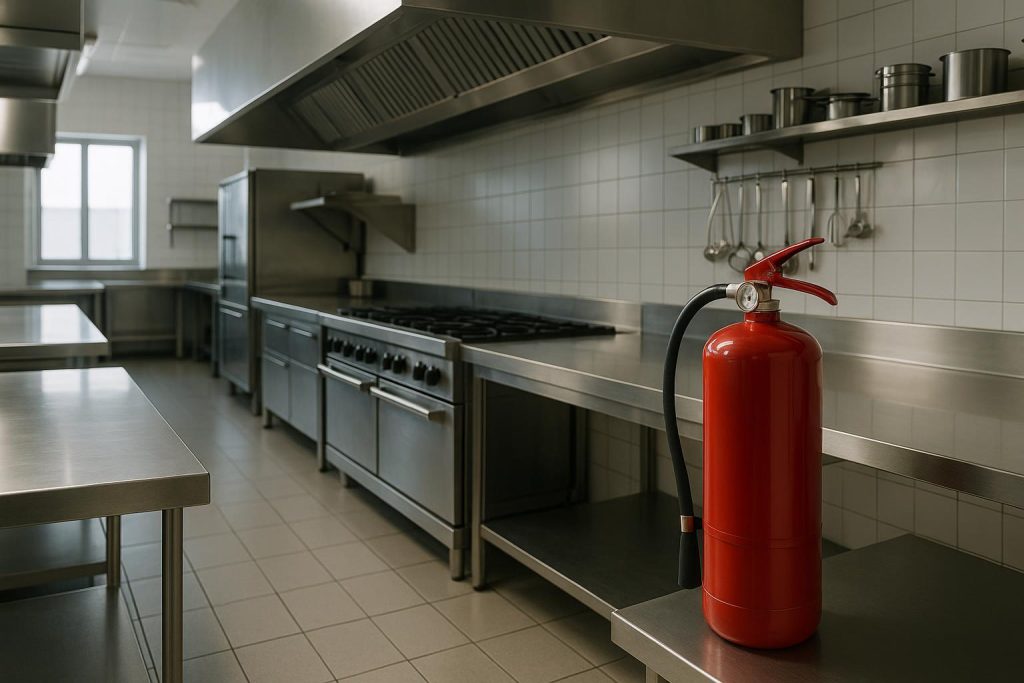
Understanding Class K Fire Extinguishers for Commercial Kitchens
When you operate a commercial kitchen, whether it’s in a bustling restaurant, a catering business, or any facility that consistently prepares large quantities of food, having the right fire extinguisher is essential. The intense heat, presence of cooking oils and fats, plus the constant movement of staff members can create a high-risk environment for fires. One of the most important elements of maintaining a safe and code-compliant kitchen is ensuring you have the proper fire protection solutions on hand. Among these, a Class K fire extinguisher is the go-to option for commercial cooking operations.
What Is a Class K Fire Extinguisher?
A Class K fire extinguisher is a specialized type of extinguisher designed to tackle fires originating from cooking media such as vegetable oils, animal fats, or other grease-laden substances. These extinguishers use a wet chemical agent to both cool the flames and ensure the fire does not re-ignite. This agent works by creating a soapy layer over the burning substance, effectively separating the fire’s fuel from the oxygen needed to sustain it. Many commercial kitchens rely on Class K extinguishers because deep fryers, griddles, and open-flame cooking stations can quickly ignite if cooking oils exceed their flash point.
Why Commercial Kitchens Need Class K Fire Extinguishers
In a busy kitchen setting, grease fires are a constant risk. Even small spills or overlooked oil residue can catch fire when exposed to heat for extended periods. Once a grease fire begins, it can spread rapidly across cooking surfaces, counters, and exhaust hoods — endangering people and property. Being able to suppress these fires in their early stages is crucial for safety. Class K fire extinguishers are not only recommended but typically required to meet commercial building codes in many regions, as they provide effective protection against fires involving cooking oils and fats. While other extinguisher types like Class ABC can handle an array of combustibles, they are not formulated to fight grease fires as efficiently or as safely as Class K units. This distinction in effectiveness is why governing bodies often specify that commercial cooking environments must include Class K extinguishers to maintain compliance.
How a Class K Fire Extinguisher Works
Class K extinguishers employ a wet chemical discharge comprised of alkaline substances like potassium acetate. When discharged directly onto a hot grease fire, this agent immediately reacts with the fats or oils, causing a process known as saponification. During saponification, the agent turns the burning grease into a foam-like barrier, effectively smothering the flames. Concurrently, the mixture substantially cools the temperature of the cooking media, reducing the risk of re-ignition. By forming a secure, oxygen-blocking blanket, Class K extinguishers ensure that the threat of the fire re-starting is significantly diminished. This functionality separates them from dry chemical extinguishers, which may disperse the fire temporarily but can leave smoldering residue hot enough to flare back up once the particles settle.
The Importance of Proper Placement
Having a Class K extinguisher is crucial, but placing it in a hard-to-reach spot or in an incorrect location diminishes its usefulness. Fire safety guidelines generally advise that fire extinguishers be placed within easy reach of employees and close to the cooking appliances, where a grease fire is more likely to develop. Fast response time is everything in a commercial kitchen. If staff can’t access an extinguisher within a matter of seconds, a small flare-up could escalate into a larger incident. Additionally, ensuring that these devices are mounted at an appropriate height helps streamline their accessibility, especially when employees are operating in a hectic environment. A few steps saved in an emergency can make all the difference in extinguishing a fire before it spreads.
Regular Inspections and Maintenance
Just possessing a Class K extinguisher isn’t enough. Your extinguisher must also be in proper working order 24/7. That’s why fire protection standards call for regular inspections, testing, and maintenance checks performed by certified technicians. By scheduling system inspections and maintenance at least on an annual basis, you confirm that the extinguisher is correctly pressurized, the nozzle is not clogged, and the maintenance tag is up to date. Reputable fire protection services providers can alert you to any signs of damage or corrosion and arrange for refills, recharges, or timely replacements. Failing to keep up with routine checks not only jeopardizes safety but can also lead to violations of local fire codes. Additionally, insurance providers often require documented proof that your fire extinguishers and other life safety systems have been inspected by trained professionals.
Furthermore, remember that most local regulations insist on clear labeling and operating instructions being printed on the extinguisher for quick recognition and usage guidance. Outdated or partially damaged labels can lead to confusion during an emergency, increasing the risk of staff using the wrong extinguisher type or activating it incorrectly. Keep your extinguishers in prime condition to ensure they remain a dependable line of defense.
Training Your Team to Handle Emergencies
Even the best fire extinguishers are only as effective as the individuals trained to use them. Commercial cooking environments often experience frequent staff turnover, which means consistent training and periodic refresher courses are critical for maintaining a knowledgeable team. Training sessions should cover the five fundamental steps of extinguisher operation, commonly known as the PASS method:
- Pull the pin
- Aim the nozzle at the base of the fire
- Squeeze the handle to discharge the agent
- Sweep from side to side at the base of the flames
Additionally, workers should learn what to do if the fire intensifies and cannot be easily contained. In some situations, evacuating the building and calling the fire department might be the safer choice. Having a clear fire emergency plan in place — so everyone knows their roles and responsibilities — is imperative.
Complementary Fire Safety Measures
While Class K extinguishers are critical, they are part of a broader fire protection framework. Commercial kitchens often install hood suppression systems that automatically release wet chemical agents when sensors detect a fire beneath cooking hoods. Pairing a hood suppression system with a Class K extinguisher offers comprehensive coverage, ensuring that if an automatic system doesn’t fully extinguish a stove-top fire, someone can step in with a portable extinguisher. Regularly inspecting, cleaning, and degreasing the hood and exhaust ducts also reduces the accumulation of flammable buildup, making it much harder for a small spark to turn into a dangerous fire.
Beyond the cooking line, consider additional protective devices. For instance, fire suppression services and customized solutions for your broader facility can help you meet industry standards and keep your staff, patrons, and business safe. You may also want to integrate regular fire alarm and suppression systems testing, especially in high-volume cooking establishments that run extended shifts. By covering potential hazards and ensuring sensors remain operational, you minimize the chance of missing early signs of a flare-up. In all fire safety decisions, building redundancy into your systems is a wise step toward optimal protection.
The Difference Between Class K and ABC Extinguishers
Although you might already have a Class ABC extinguisher onsite — capable of handling wood, paper, liquid, and electrical fires — it’s not the effective choice for cooking grease fires. The dry chemical agent in ABC extinguishers lacks the cooling and smothering properties required to combat deep fryer or oil-based fires without risking an immediate re-ignition. Hence, while Class ABC extinguishers remain outstanding for general combustibles in offices and hallways, a Class K extinguisher is specifically formulated to handle the unique challenges presented by commercial kitchen fires. Having both types of extinguishers within their designated areas ensures that no matter what kind of fire you face, the proper tool is accessible in seconds.
Ensuring Code Compliance
Commercial kitchens are subject to thorough inspections by fire marshals or other local regulatory bodies. These inspections typically verify whether you have the right type and quantity of fire extinguishers, along with confirming their accessibility and proper maintenance. Failure to meet these requirements could result in fines or worse, the closure of your business until corrections are made. Staying up to date with your compliance tasks also safeguards your brand reputation. Customers are more confident entering a facility that adheres to stringent fire safety standards.
Local building codes and health department guidelines also frequently hinge on whether you have adequate life safety systems in place. These systems can include everything from sprinklers and smoke detectors to regular equipment checks. Class K extinguishers fit into this framework by targeting the most probable cause of fire in a cooking environment: grease. When inspectors see a properly labeled, fully charged Class K extinguisher near your fryer, they can verify that you’re aligned with the necessary fire protection codes and guidelines in your area. This thorough approach reduces liability and ensures your kitchen operates in a safe, responsible manner.
Choosing the Right Size and Type
Class K extinguishers come in a range of sizes, so consider your kitchen layout, the volume of daily cooking, and the type of appliances in use. A high-volume commercial kitchen may require larger, higher-capacity extinguishers, or multiple units in strategic locations. Smaller kitchens, such as those in cafés or food trucks, might only need one or two medium-capacity extinguishers. Always consult with fire protection experts to determine the most suitable size and number of extinguishers for your unique operational requirements.
Make sure to coordinate these choices with any existing fire extinguisher or fire suppression services you already have. Professionals can help you pick out the correct models, plan a cohesive coverage strategy, and integrate these extinguishers with other systems, such as automated hoods or sprinkler networks. Thorough planning ensures that you proactively address potential hazards instead of reacting to them when it’s too late.
Building a Proactive Safety Culture
Fire safety in a commercial kitchen shouldn’t be a mere afterthought or a slapdash add-on for code compliance. By making it an ongoing part of your company culture, you help protect employees, prevent property damage, and preserve business continuity. Train staff to spot early warning signs of grease buildup or faulty equipment. Encourage employees to report potential hazards immediately and to keep cooking areas neat and free from clutter. Routine cleaning protocols also play a huge role in preventing oil residue from accumulating in areas where a random spark or high heat can ignite it.
You can outline an internal safety checklist on a monthly or weekly basis, depending on how busy your kitchen is. This checklist might include verifying the cleanliness of ventilation hoods, ensuring extinguishers are in their rightful place, and making sure employees practice safe cooking temperatures. Showcase your commitment to safety by acknowledging and rewarding staff who excel in these areas. The more you emphasize that the entire team is responsible for fire prevention, the more likely your kitchen will operate smoothly all year round.
Creating Clear Emergency Procedures
To build on your fire protection strategy, it’s also wise to establish an emergency action plan that every staff member understands. While your Class K extinguisher will be the first line of defense, there could be times when a fire extends beyond the capability of portable extinguishers. Management and staff should know when to evacuate and how to initiate an emergency shutdown of critical equipment. Post clear evacuation routes in communal areas, test your fire alarm system regularly, and make sure that doors and exits remain unblocked at all times.
By periodic practice drills, your kitchen team becomes familiar with the procedures, helping them respond calmly and decisively. The role of a few designated fire wardens may also be beneficial to help coordinate safe evacuations and communicate with emergency services. With these steps, you create a structure where a sudden emergency doesn’t spiral into chaos.
Working with Certified Fire Protection Experts
A robust fire safety plan relies on consistent, expert guidance. Collaborating with certified technicians not only ensures that your extinguishers and other fire protection services are code-compliant, but also that they are tailored to your unique kitchen environment. Professionals who specialize in fire alarm and suppression systems can assist from the initial consultation through installation and ongoing maintenance. This partnership will help you stay on top of any updates in local fire regulations, new best practices, and innovations in fire protection technology.
Additionally, an expert service provider can perform hazard analyses, testing, and extended training for your employees. They’ll also remind you about annual inspection schedules and keep you informed of any changes that might affect your operational efficiency and compliance. By working with the right specialists, you can rest assured that all aspects of your kitchen’s fire protection are well integrated, monitored, and maintained.
Wrapping Up: Stay Prepared with the Right Extinguisher
A Class K fire extinguisher is far more than just an item to check off a regulatory list; it is a key resource in safeguarding your employees, facility, and customers. Because grease fires in cooking environments often escalate quickly, having this specialized extinguisher on hand gives you the best chance of containing a blaze before it becomes unmanageable. Consider incorporating a comprehensive safety plan that includes regular staff education, routine maintenance of your extinguishers, and dedicated fire suppression services. This strategy enables you to create and sustain a culinary operation that is not only code-compliant, but also secure and worry-free.
Managing a busy kitchen demands constant vigilance. However, when everyone is prepared, the cooking environment becomes safer and more efficient. Whether you oversee a single small diner or run multiple high-capacity kitchens, remember that fire safety is an ongoing commitment. By installing the right extinguishers, scheduling timely inspections, and fostering a proactive safety culture, you can focus on what you do best — delivering excellent food and service — with the confidence that you’re well-prepared should a fire emergency arise.
