
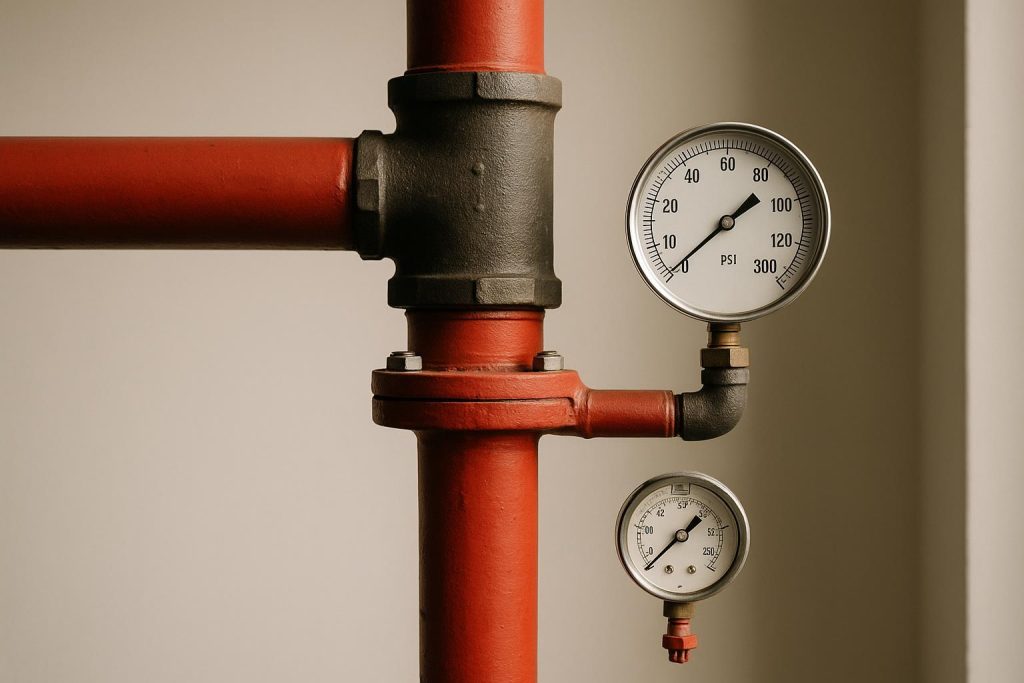
How to Address Pressure Drops During Pipe Testing
Pipe pressure testing is a vital step in ensuring the reliability, safety, and performance of a piping system—especially in fire protection setups like fire sprinkler networks. When a test reveals a pressure drop, it can signal issues such as leaks, compromised seals, or design flaws. Even a minor dip can hint at potential future failures, so thoroughly investigating and resolving the cause is crucial. In the context of life safety systems and fire protection services, pressure integrity is necessary to maintain code-compliant operation. Below, we’ll explore what you should do if you discover a measurable pressure drop during testing, and how professional guidance can help keep your building safe and up to code.
Understanding the Importance of Pipe Pressure
Pressure requirements in fire suppression and sprinkler systems are designed to ensure that water or fire-suppressing agents can flow effectively to every area that needs protection. If your pipes cannot maintain the designated pressure, your fire safety system may fail at a critical moment. Pressure drops can gradually worsen if not addressed, leading to water damage or even a complete system malfunction.
Beyond emergency fire services, properly functioning pipes are also key to preventing leaks and water damage in other systems, such as water supply lines in commercial and industrial facilities. That said, detecting a pressure drop during routine inspections and maintenance has unique implications for building safety and compliance. Modern fire alarm and suppression systems often include advanced sensors to detect low pressure; if an issue is left unresolved, you may encounter frequent alarms, reduced fire extinguishing capability, code violations, or even insurance complications. That’s why understanding and acting on the initial signs of pressure drop is so essential.
Common Causes of Pressure Drops
A pressure drop can arise from:
- Small Leaks or Cracks: Even a hairline fracture can slowly release pressure. When that failure point is located inside a wall or ceiling, it can be difficult to detect until you notice physical water damage or a persistent decrease in your test readings.
- Wear and Tear: Corrosion, scaling, and natural material degradation are especially common in older systems that have not undergone consistent system inspections and maintenance. Over time, fittings or valves might loosen, leading to a pressure drop.
- Improper Installation: If the original pipework wasn’t installed to code-compliant standards, you might find misaligned connections, incorrectly sized parts, or poor-quality pipe materials. Any of these issues can cause water to escape under pressure.
- Faulty Valves: Valves control flow and help maintain consistent pressure. However, worn-out or seized valves can lead to an unsteady flow or small leaks. This is particularly relevant in fire sprinkler systems, where valves are critical to distributing water rapidly in an emergency.
- Temperature Fluctuations: Extreme shifts between hot and cold can cause pipes to expand or contract. Excessive movement weakens the pipe walls or joints, making it easier for leaks to form.
Identifying the cause of a pressure drop begins with a comprehensive examination by certified technicians. Expert eyes can differentiate between a subtle leak and a more serious structural concern, ensuring you don’t waste resources or compromise building safety.
Step-by-Step Response to a Pressure Drop
Once you confirm there is a significant pressure drop, consider the following actions:
- Verify the Equipment: Occasionally, a faulty gauge or poorly calibrated equipment can cause false readings. Before initiating any major repairs, verify that the testing instruments themselves are accurate.
- Perform a Visual Check: Inspect accessible areas of the system—especially around joints and valves—for signs of leaking water, rust, or corrosion. Listen for dripping, hissing, or unusual sounds near pipe connections.
- Conduct a Leak Detection Test: If a visual check isn’t conclusive, specialized leak detection tools or thermal imaging can locate hidden leaks behind walls or underground. Certified technicians can carry out advanced diagnostics so you know exactly where the pressure drop originates.
- Isolate Problematic Sections: Subdivide the piping system by closing valves or using bypass lines so you can narrow down the zone with the issue, saving time and minimizing disruption. This method also helps confirm which areas are functioning properly, allowing operations to continue in unaffected sections.
- Create a Repair Plan: Depending on where the leak or fault is located, your plan could range from resealing a valve to replacing entire pipe segments. Consult professional fire protection services for the recommended approaches to maintain your system’s code-compliant status.
- Inspect Vitals of the System: Pressure issues often come alongside other system vulnerabilities, so this is a good time to examine couplings, brackets, pressure relief valves, and any fire suppression agents. Staying vigilant can prevent future dips in pressure while enhancing overall safety readiness.
- Retest After Repairs: Finally, confirm everything is functioning by retesting the repaired or replaced sections. This ensures the pressure remains steady under normal operating loads. If further drops occur, an even deeper investigation may be necessary.
The Role of Certified Technicians
Enlisting skilled professionals is a pivotal aspect of diagnosing and resolving pipe pressure issues. Experienced technicians bring industry-specific expertise in fire protection and life safety systems. With specialized training, they can identify subtle signs of corrosion, structural shortcomings, or installation errors. They also know how to balance the need for repairs with the imperative of keeping critical fire safety systems operational, ensuring minimal disruptions.
Furthermore, professionals follow recognized codes and regulations, utilizing official guidelines when selecting repair materials and methods. In many regions, these requirements are strictly enforced to protect both property and occupant well-being. Relying on unqualified help risks non-compliance with safety codes, which could lead to legal and financial repercussions.
Maintenance and Inspection Best Practices
Preventative care is key to stopping pressure issues before they arise. Any advanced fire protection plan should include:
- Regular System Inspections: Engage in scheduled inspections and maintenance at intervals recommended by manufacturer guidelines and local fire codes. Early detection saves time and money, plus it keeps your building prepared for emergencies.
- Environmental Considerations: Monitor the environment in critical areas. Persistent humidity, extreme heat, or freezing temperatures put added strain on pipes.
- Professional Testing Procedures: Periodic testing of pressure valves, fire pumps, and sprinklers ensures that your systems are always ready. This includes verifying that sensors in fire alarm and suppression systems promptly detect unusual shifts in pressure.
- Documentation: Clearly record any changes, occurrences of pressure drops, and all corrective measures. Meticulous records help you track patterns over time and prove compliance during official inspections.
Ensuring Code Compliance and Life Safety
While safety is the top priority, meeting mandated codes is also essential for property owners and managers. Local fire protection authorities and insurance providers often require that life safety systems be fully operational and consistently maintained. A lingering but unaddressed pressure drop can result in citations, fines, or complications with insurance claims. Moreover, non-compliance endangers occupants and interrupts business operations in the event of a fire.
Certified technicians trained in code-compliant repair techniques can ensure that any modifications to your piping do not violate local or national standards. This might involve selecting materials that meet fire protection service criteria or adding new components such as backflow preventers, check valves, or specialized fittings. Maintaining up-to-date compliance not only offers peace of mind but also solidifies your standing as a responsible property owner or facility manager.
Fire Sprinkler Systems: Special Considerations
Fire sprinkler systems rely on consistent water pressure to respond quickly in an emergency. If a pressure test reveals that water flow might be compromised, you should act swiftly:
1. Immediate Notification: If your system has a monitoring service, you may receive an alert about the pressure anomaly. Contact your service provider or local fire suppression experts right away.
2. Temporary Measures: In certain cases, isolating the leaking segment can keep the rest of the sprinkler network online while repairs proceed. However, long-term partial service is never a safe substitute for prompt repair.
3. Professional Collaboration: Consult with a reputable fire protection service to ensure that any fix or component replacement is in line with your building’s design requirements and local regulations.
Additionally, if you own or manage multiple properties or have a large-scale sprinkler network, employing a systematic approach to testing is crucial. By documenting each zone and regularly verifying that sprinklers function as intended, you reduce the risk of widespread issues and maintain an accurate record for fire safety audits.
When to Seek Expert Fire Protection Services
While minor, sporadic pressure fluctuations may not always signal an emergency, any consistent or recurring pressure drop calls for expert help. Complex commercial or industrial systems, such as those found in multi-story buildings, manufacturing plants, or data centers, require thorough examination to uncover hidden faults. Promptly addressing a pressure drop can avert disruptive water damage and maximize peace of mind. For businesses and property managers in need of advanced solutions, contacting knowledgeable technicians can provide the clarity and reassurance to help you meet your safety goals.
If you operate in Alberta or the surrounding area, an experienced fire protection provider can assess your sprinkler piping, conduct specialized inspections, and recommend suitable upgrades. As an example, fire sprinkler services typically include pressure testing, system cleaning, and any necessary pipe replacements or repairs within one comprehensive plan.
Proactive Steps to Minimize Future Issues
Even after you resolve an existing pressure drop, consider these proactive strategies to reduce future risks:
- Install Clean Agent Systems: In sensitive environments—like server rooms—these systems can be a safer alternative to water-based approaches, minimizing the risk of damage from leaks.
- Upgrade Aging Components: If your system includes older valves, fittings, or sections susceptible to corrosion, proactive replacement mitigates long-term maintenance headaches and ensures consistent performance.
- Ongoing Consultation: Establish a relationship with a local fire protection provider for regular support and guidance. Routine evaluations by certified technicians often catch small problems before they grow into major repairs.
- Keep Up with Code Revisions: Fire safety regulations can evolve. Stay informed of updates so you can adjust your system if needed, preventing code infractions and safeguarding occupants.
Final Thoughts
When pipe pressure testing reveals a drop, it’s more than just a plumbing hiccup. Especially in the realm of life safety systems, consistent pressure stands at the heart of a building’s emergency protection plan. From safeguarding occupants and assets to meeting regulatory standards, ensuring stable pressure is non-negotiable. By performing timely inspections, working with certified technicians, and taking advantage of professional fire protection services, you can secure your system’s readiness for emergencies. Addressing a pressure drop now not only saves you from immediate risks but helps you establish a reliable framework for long-term safety and compliance.
If you suspect or confirm a pressure drop in your fire suppression or sprinkler system, it’s best to partner with knowledgeable experts who can diagnose the exact cause and implement effective solutions. Don’t wait for small problems to escalate. By acting promptly, you reinforce a solid foundation of safety, minimize the chances of property damage, and maintain peace of mind that your facility is code-compliant and well-prepared for any event.
