
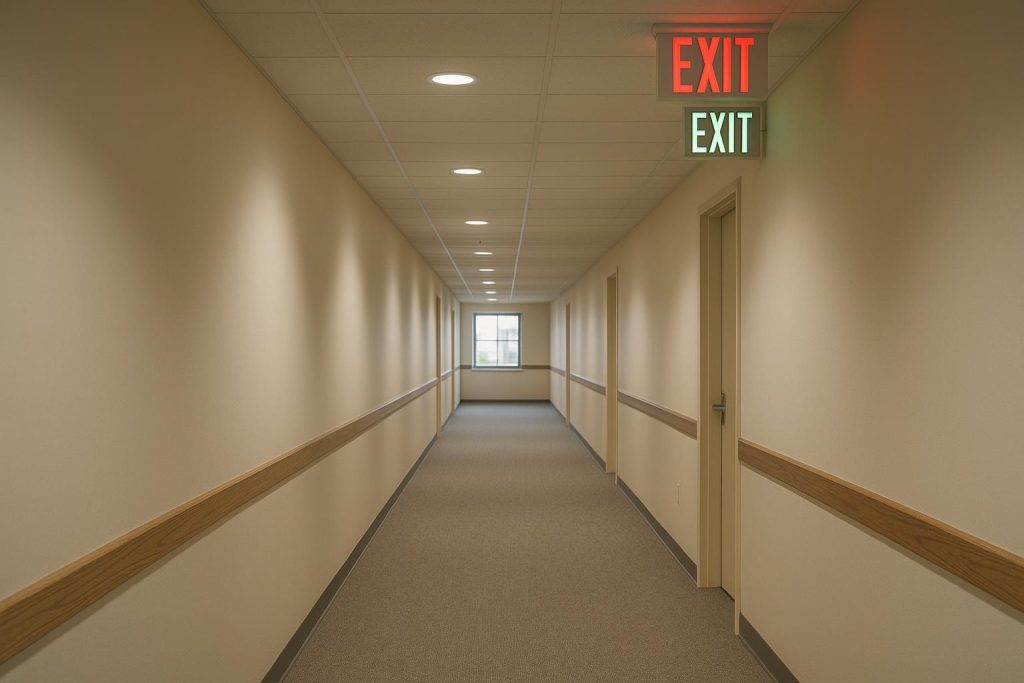
The Importance of Choosing the Right Exit Sign for Emergency Safety
Exit signs are an integral part of life safety systems and are critical in helping people find their way out of a building during an emergency. Whether you manage a commercial property, operate an industrial facility, or oversee a residential complex, proper exit signage not only reduces panic but also supports compliance with local building codes. Two commonly seen types of exit signs are red and green. Despite their universal aim—to guide occupants to safety—the difference in color can affect visibility, overall effectiveness, and alignment with regional requirements. Understanding the benefits of each color can help you make informed decisions about your property’s safety measures.
In many regions, green exit signs are more prevalent because of how the human eye processes different wavelengths of light. Green is easier on the eyes in smoky conditions, allowing individuals to spot the sign quickly. Meanwhile, red exit signs have their own advantages, often matching certain fire code or building code specifications in various jurisdictions. Ultimately, building owners must weigh color visibility, code requirements, and occupant familiarity when choosing exit signs, in order to ensure the highest level of safety for everyone.
Why Color Matters in Emergency Settings
Color perception plays a significant role in how humans respond to visual cues, especially under stress. In an emergency scenario, time is of the essence. Smoky or low-light conditions can impair visibility, and individuals must rely on clear, bright signals to promptly locate exits. Studies have shown that green light is particularly easy for the human eye to detect in dim or obstructed conditions. By opting for green exit signs, property owners align with findings that highlight how color can enhance legibility, especially in disaster scenarios. However, this does not automatically disqualify red exit signs from effective use. In certain regions, red is the longstanding standard, making it easily recognizable to people walking through the premises.
The advantage of green signage is also linked to how our rods and cones react to different wavelengths of light. Green wavelengths often fall in the sweet spot of human comfort, making them more receptive in compromised or low-light situations. Red, by contrast, has a place in some building codes due to historical adoption and the idea that red stands out strongly against lighter backgrounds. Ultimately, whether you choose red or green may depend on local regulations, aesthetic considerations, and occupant familiarity. Regardless of color, the most important factor is that an exit sign is well-lit, unobstructed, and easily referable in an emergency.
Key Benefits of Green Exit Signs
Green exit signage has been widely adopted in many parts of the world because of its enhanced visibility. Below are key benefits building owners might consider when selecting a green exit sign:
- Visibility in Smoke-Filled Environments: In a fire situation, thick smoke can obscure vision. Green light cuts through haze more effectively, enabling people to spot the illuminated lettering and follow it to safety.
- Universal Recognition: The concept of green as a ‘go’ or ‘safe’ color is familiar to occupants, reinforcing the idea that a green exit sign indicates a secure path.
- Eye Comfort: Green-based illumination is easier on the eyes, which can be beneficial for quick recognition during stressful moments.
- Compliance in Many Modern Buildings: Numerous updated building codes specify or permit green because of its proven benefits in emergencies.
While these attributes explain why green exit signs are so popular, it is essential to verify local regulations regarding color requirements. Some jurisdictions give you the freedom to choose red or green, whereas others specify an exact standard.
When Red Exit Signs Might Be Appropriate
Despite the visibility advantages of green, red exit signs are also seen in many facilities, particularly in regions with longstanding regulatory frameworks or specific design elements. Red exit signs can be advantageous for properties where building codes or occupant familiarity favor that color. For instance, certain codes in North America historically specified red signage, linking the color with the notion of emergency alerts and alarm states. If a local authority enforces the use of red, property owners will follow that guideline to remain code-compliant.
Additionally, red exit signs can stand out vividly in facilities designed with lighter walls or lighter interior color schemes. This contrast helps individuals quickly locate egress routes, especially if the sign is supplemented by emergency lighting. If you are unsure which color your local code mandates, consulting a professional in fire protection services is a wise first step. Such professionals stay updated on both the national codes and local amendments, ensuring that your building remains compliant and that occupants can exit safely if a fire occurs.
Meeting Building and Fire Code Requirements
Ensuring your building follows the correct code for exit signage color is a fundamental obligation. Not only does compliance help you avoid fines and potential legal issues, but it also ensures the safety of everyone in the building. Codes can differ from area to area, which is why local expertise is invaluable. For example, you might find that some Canadian provinces primarily recommend green exit signs, while other jurisdictions in the United States commonly require red. Regional fire departments or building officials can clarify these nuances.
On top of color, code compliance covers the installation height, the brightness of the illumination, and the backup power source. Exit signs typically need to be powered by the main electrical supply and coupled with a battery backup or generator system for redundancy. Certified technicians from a reputable fire protection service can ensure your exit signage also meets practical standards, such as being positioned along common pathways to exits and near doorways. Engaging qualified professionals helps with both initial installations and long-term system inspections and maintenance.
How Visibility Impacts Smoke-Filled Rooms
One of the most critical factors in any life safety system is visibility during extreme conditions. Fires produce not only flames but also thick smoke that can obscure even bright lighting sources. In these moments, the clarity of an exit sign can spell the difference between panic and a safe evacuation. Green exit signs often come out on top in smoke tests, because the human eye is quicker to detect green wavelengths amidst gray or dark backdrops. This advantage becomes especially important in industrial settings or larger commercial buildings where smoke can travel quickly, reducing the time occupants have to orient themselves.
If your facility resides in an area prone to certain types of industrial hazards, it’s worth investing in photoluminescent or LED-based green exit signs designed for continuous high visibility. Photoluminescent signs glow even if the power fails, provided they receive the proper level of ambient light charging. LED signs, on the other hand, deliver consistent brightness, are known for energy efficiency, and can remain lit through connected battery backups. Whether red or green, ensure your sign’s rating and design are suited for the hazards and environmental factors your building might face.
The Role of Exit Signs in Overall Fire Protection
Exit signage is but one part of a broader strategy to safeguard occupants and property. This collective approach often includes fire alarm systems, fire extinguishers, fire sprinklers, and even fire suppression services for special hazards or commercial kitchens. When integrated properly, these elements create a cohesive life safety network that detects issues early, offers occupant alerts, and provides safe egress. If you need a more comprehensive review of fire protection services, you can explore the Fire Protection Services page, which covers the wide range of inspections, installations, and maintenance options available.
In addition to exit signage, regular system testing ensures that your alarms, sprinklers, and extinguishers are operational when an emergency unfolds. A reliable fire alarm system can drastically reduce response time by alerting occupants and first responders. Fire extinguishers and suppression systems help extinguish or reduce the spread of flames, giving people more time to evacuate. When these measures align with clearly marked and brightly illuminated egress paths, the result is a robust safety ecosystem. For businesses in Alberta, or specific municipalities such as Edmonton or Sherwood Park, it’s often beneficial to work with local experts familiar with both national and municipal fire codes, ensuring the highest standards of protection.
Staying Prepared: Annual Inspections and Maintenance
Whether your facility features red or green exit signs, maintaining them is key to long-term code compliance and occupant safety. Regularly scheduled inspections help you detect issues early, such as burned-out bulbs, faulty connections, or a depleted backup battery. Working with certified technicians who specialize in system inspections and maintenance simplifies the process, ensuring that your exit signs consistently provide clear guidance.
Beyond meeting mandatory inspections, proactive maintenance fosters peace of mind. If you oversee a commercial building, for instance, you can’t always predict when a disaster might occur, but you can make sure your safety measures remain updated and functional. The same applies to industrial operations that handle flammable materials or complex equipment. Detecting a problem with an exit sign before it fails ultimately protects both your personnel and property.
Choosing the Right Exit Sign for Your Building
In summary, the debate between red and green exit signs revolves around factors such as visibility, regional code requirements, and occupant perception. Green exit signs often excel in smoke-filled rooms due to enhanced visibility and comfort for the human eye. Meanwhile, red exit signs may be suitable or even mandated in certain jurisdictions, offering strong contrast and a well-known color association with emergencies. Before settling on a specific color, consult local building codes or work with a fire protection service provider who can guide you through the entire process from selection to installation.
Whichever color you choose, guarantee your signs are code-compliant, clearly visible, well-lit, and backed by a reliable energy source. Cabling, backup batteries, or generators must be routinely inspected to prevent any untimely failures. Exit signs become far more effective when they are paired with other life safety systems, such as fire sprinklers, alarms, and extinguishers, forming a well-rounded safety net. If you have questions about exit sign requirements or wish to integrate comprehensive fire protection measures, don’t hesitate to contact a certified professional who can tailor solutions to meet both your safety objectives and compliance needs.
