
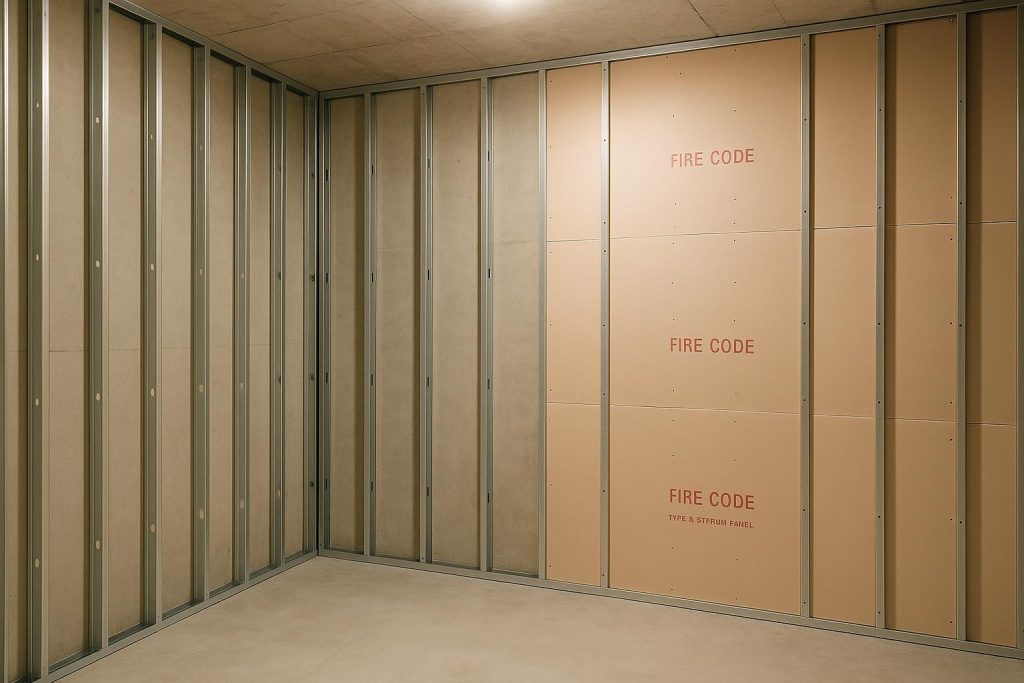
Understanding Whether Fire-Rated Drywall Is Required
Fire-rated drywall, often referred to as “Type X” or “Type C” gypsum board, is designed to withstand high temperatures for a longer period than standard drywall, giving occupants critical time to evacuate and first responders more opportunity to contain a blaze. Whether fire-rated drywall is explicitly required depends on local building codes, the intended use of the space, and the overall fire safety plan of the structure. In many jurisdictions, certain areas of a building, such as corridors, utility rooms, or walls adjacent to living spaces, must use fire-rated drywall to help minimize fire spread and smoke damage.
For commercial properties, the National Building Code of Canada or municipal regulations may mandate fire-rated drywall in interior partitions, especially where firewalls or fire separations are necessary. It is typically installed alongside other fire protection measures like alarms, sprinklers, and suppression systems for comprehensive safety. Incorporating fire-rated drywall can make a significant difference in maintaining structural integrity and enhancing occupant safety, as these specialized boards contain glass fibers that slow the breakdown of gypsum under intense heat.
If you are uncertain whether fire-rated drywall is required for your project, it is essential to check your municipality’s regulations. Consulting a professional or reviewing your local building code can help determine the exact specifications and fire-resistance rating needed to stay compliant. Proper installation is also crucial: seams must be sealed, periodic inspections conducted, and damaged boards replaced to maintain consistent performance.
It is helpful to remember that fire-rated drywall on its own may not be sufficient to protect a building. A complete fire protection strategy often includes measures such as Fire Protection Services and regular maintenance of alarms or detectors. Staying informed about all available options ensures you create a safer environment, whether for a commercial building, industrial complex, or multi-unit residential development. If you need more information for a specific project or want guidance on fire safety measures, consider reaching out to a qualified professional for a thorough assessment.
